
Cove lighting
How a cove's depth, direction and distance from the wall change the light, and what to settle early with the architect.
Cove depth
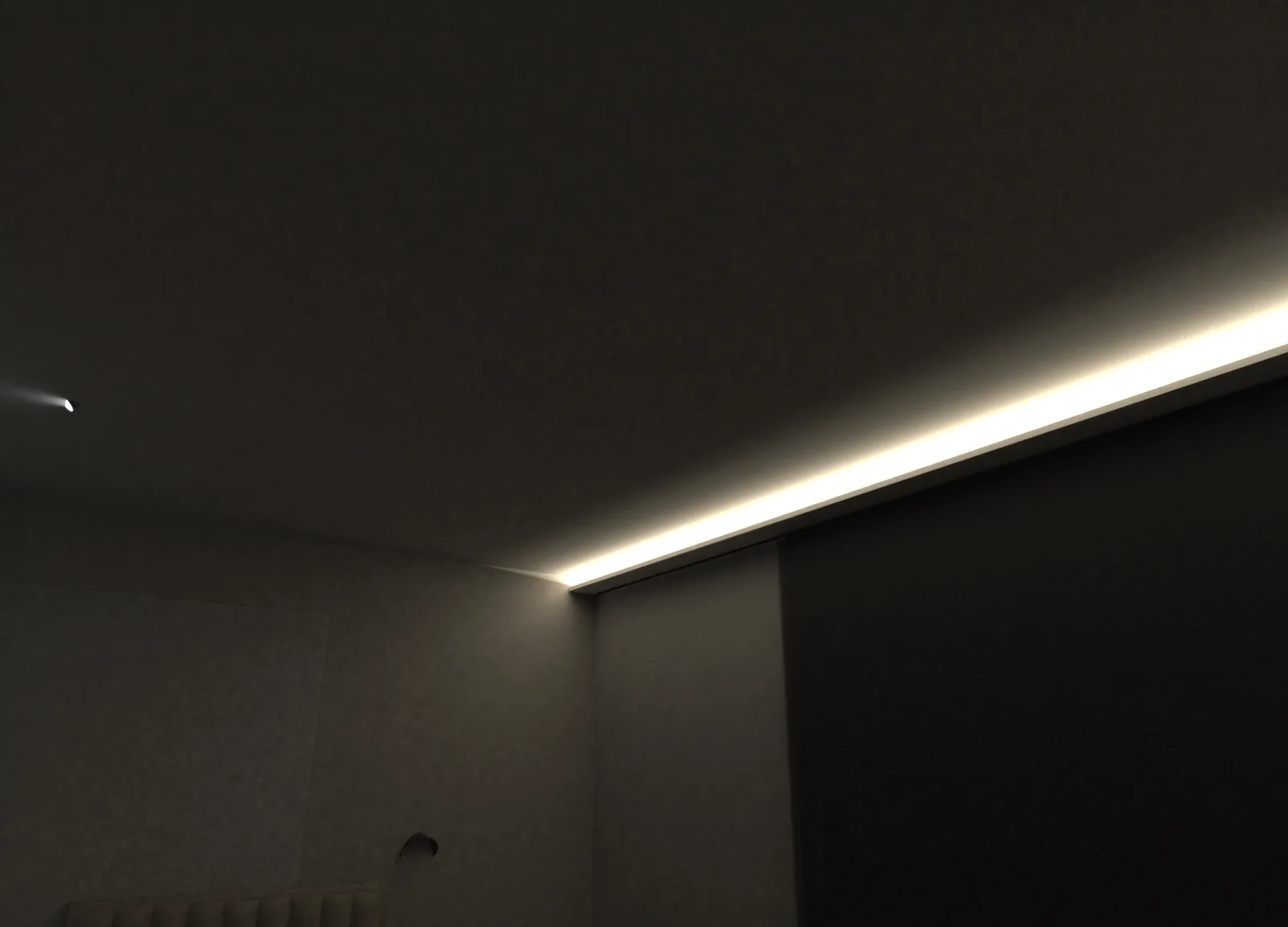
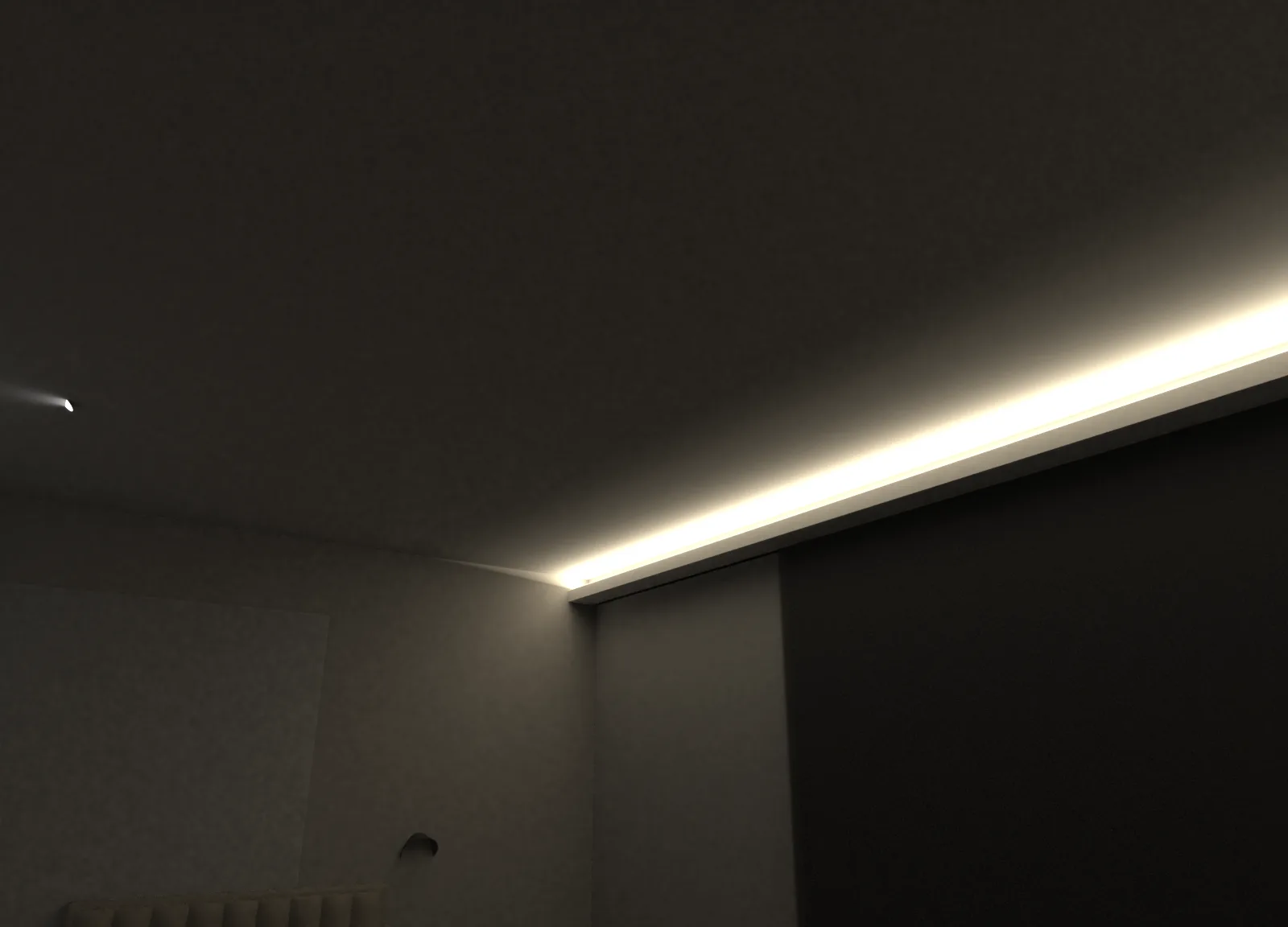
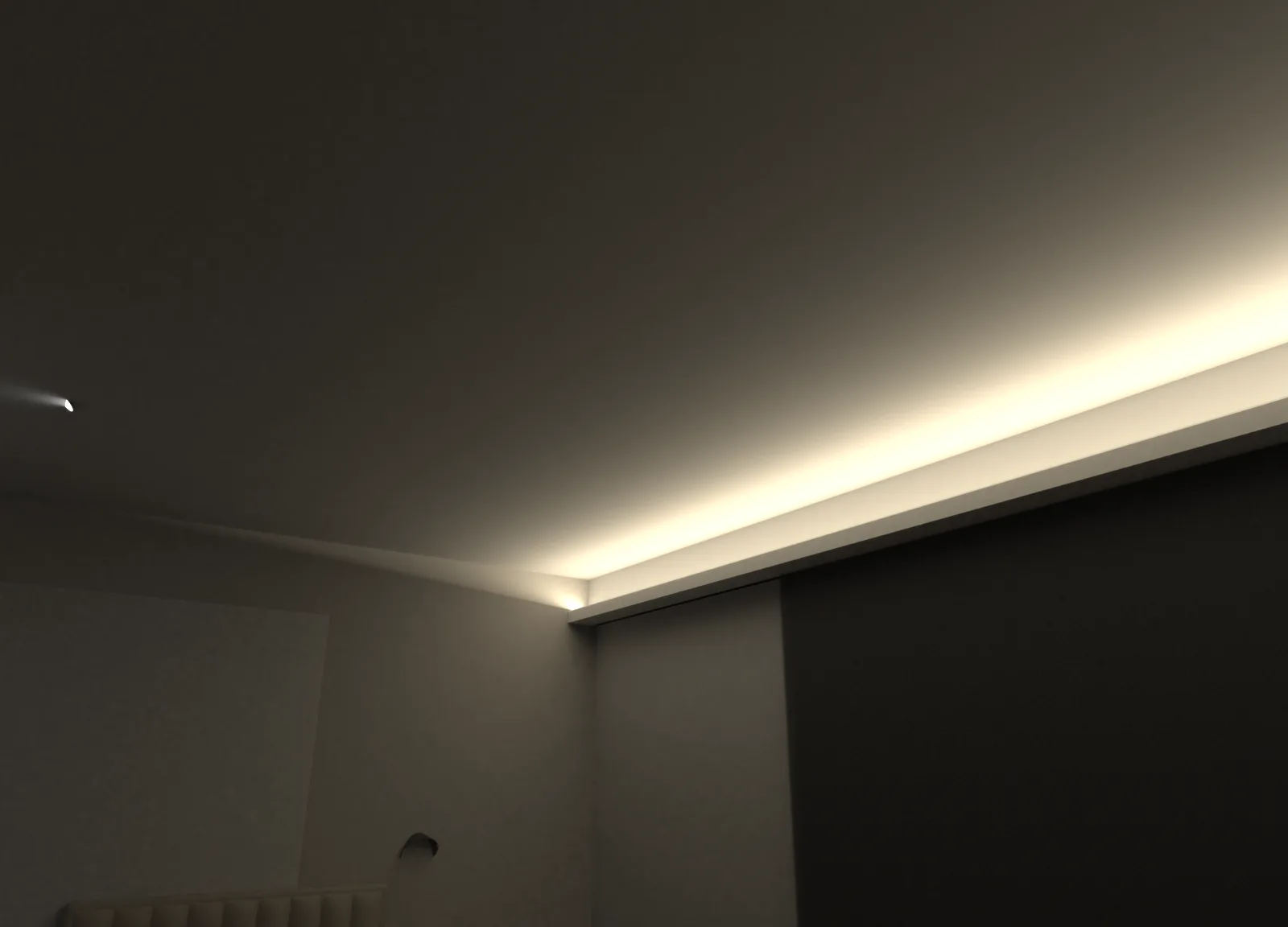
A cove is a pocket that hides a strip of light and sends the light onto the ceiling or a wall. The three pictures below change one dimension: how far the floor of the pocket is below the ceiling. It is 2, 4 and 8 inches. The strip, its output and the width of the pocket are the same in all three.
At 2 inches the light stays in a bright band along the edge of the ceiling. At 8 inches it reaches much further across the ceiling and fades out gradually. The deeper cove needs a taller fascia, and the architect places it in the ceiling design.
Check the strip manufacturer's recommended distance to the ceiling before the soffit is drawn.
Ceiling or wall
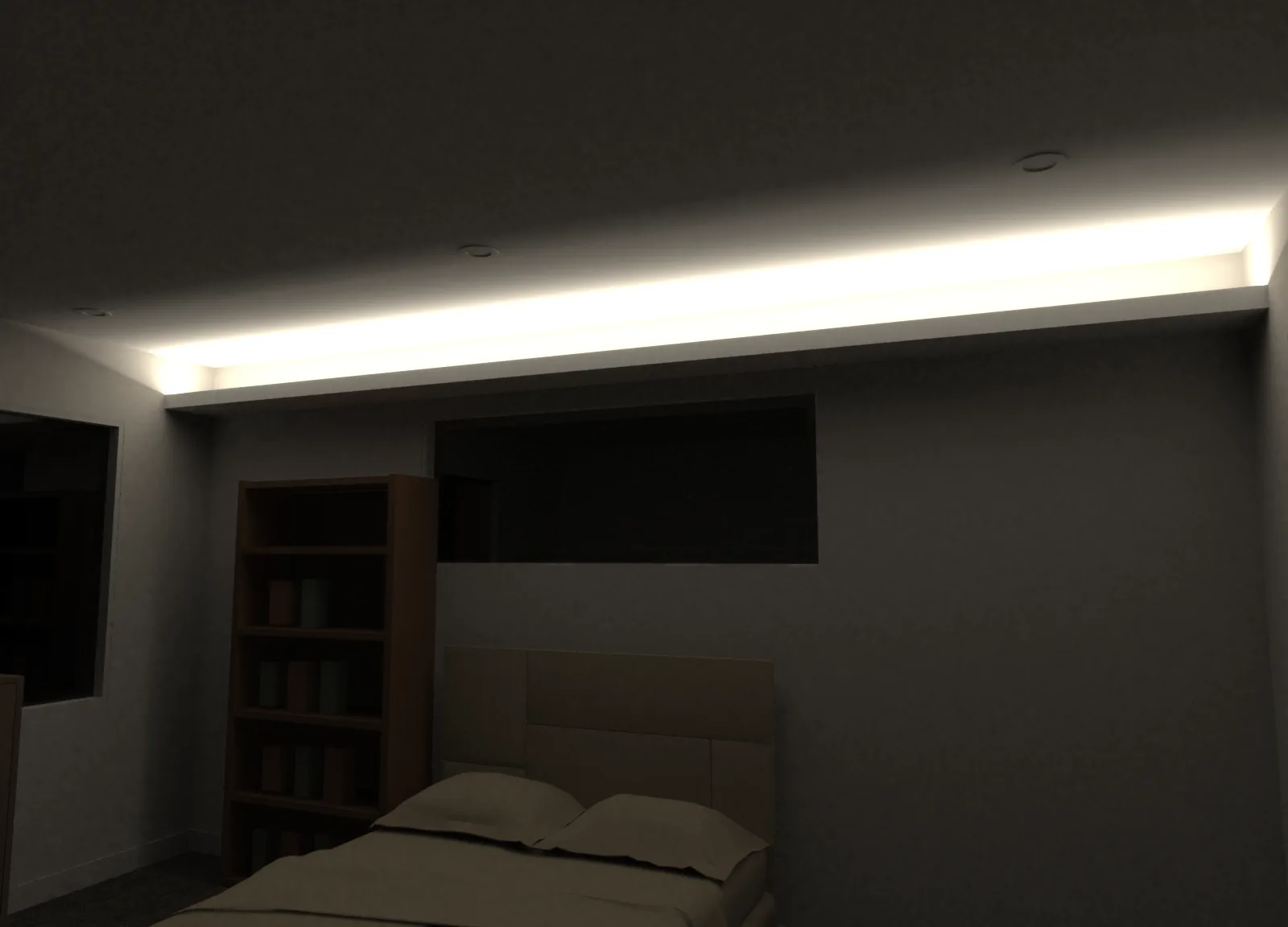
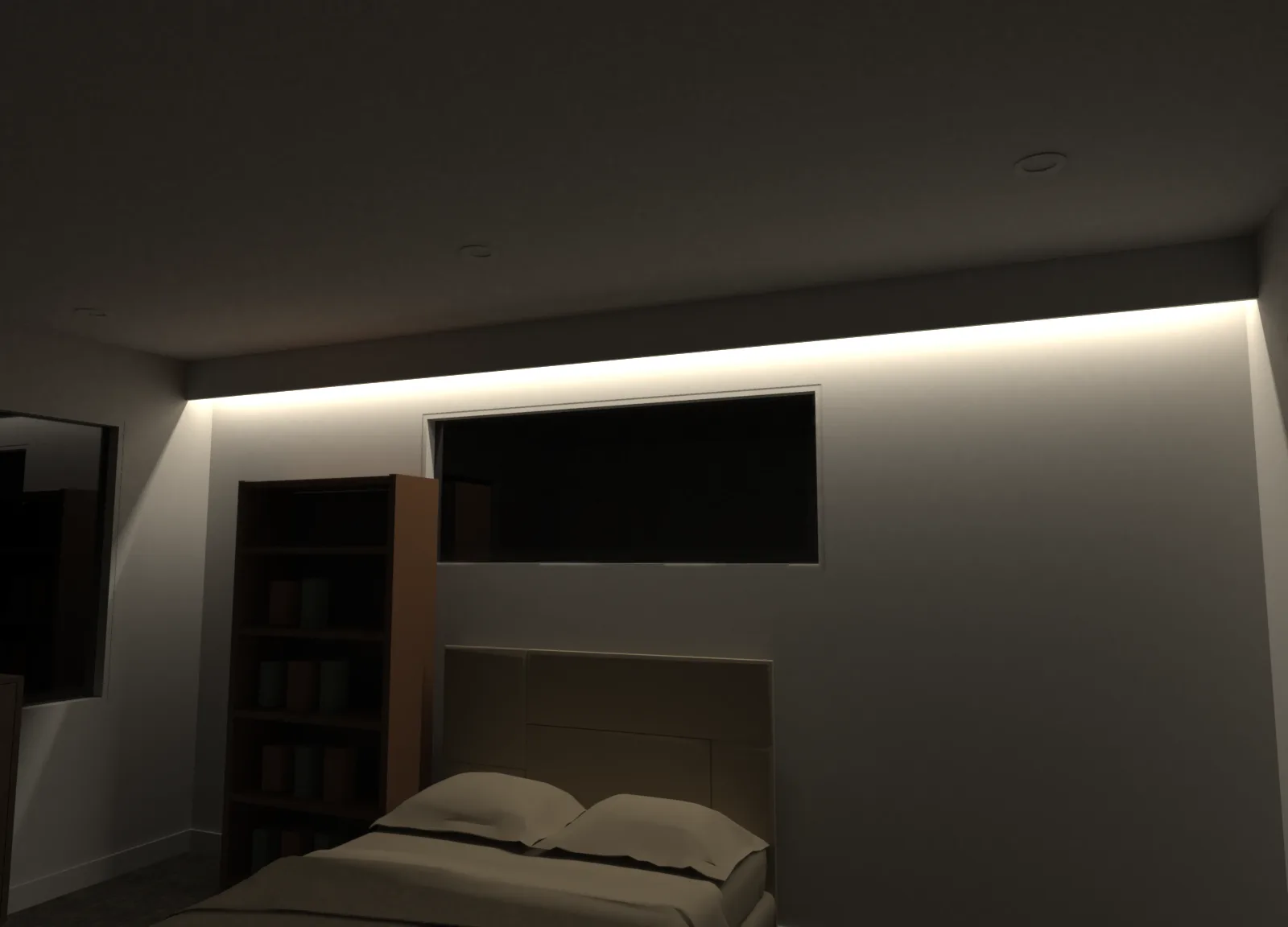
The same soffit can light the ceiling above it or the wall below it. In this bedroom, the cove aimed up lights the ceiling and the wall stays in shadow. Aimed down, it lights the wall above the bed and the ceiling stays dark.
We choose the direction for how the room is used at night. A lit ceiling lights the whole room softly. A lit wall puts the light on the headboard, art or a material.
Grazing and washing a wall
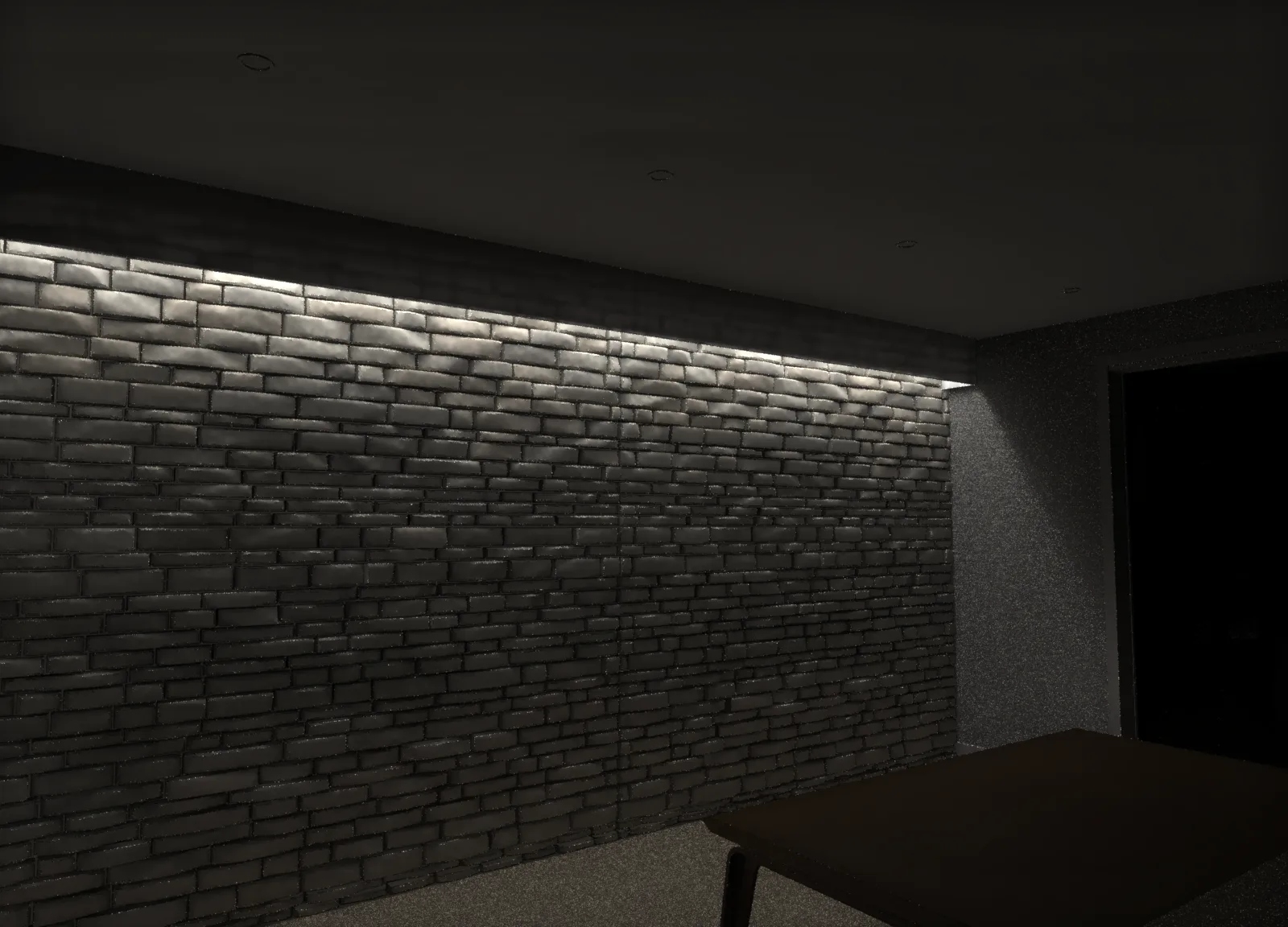
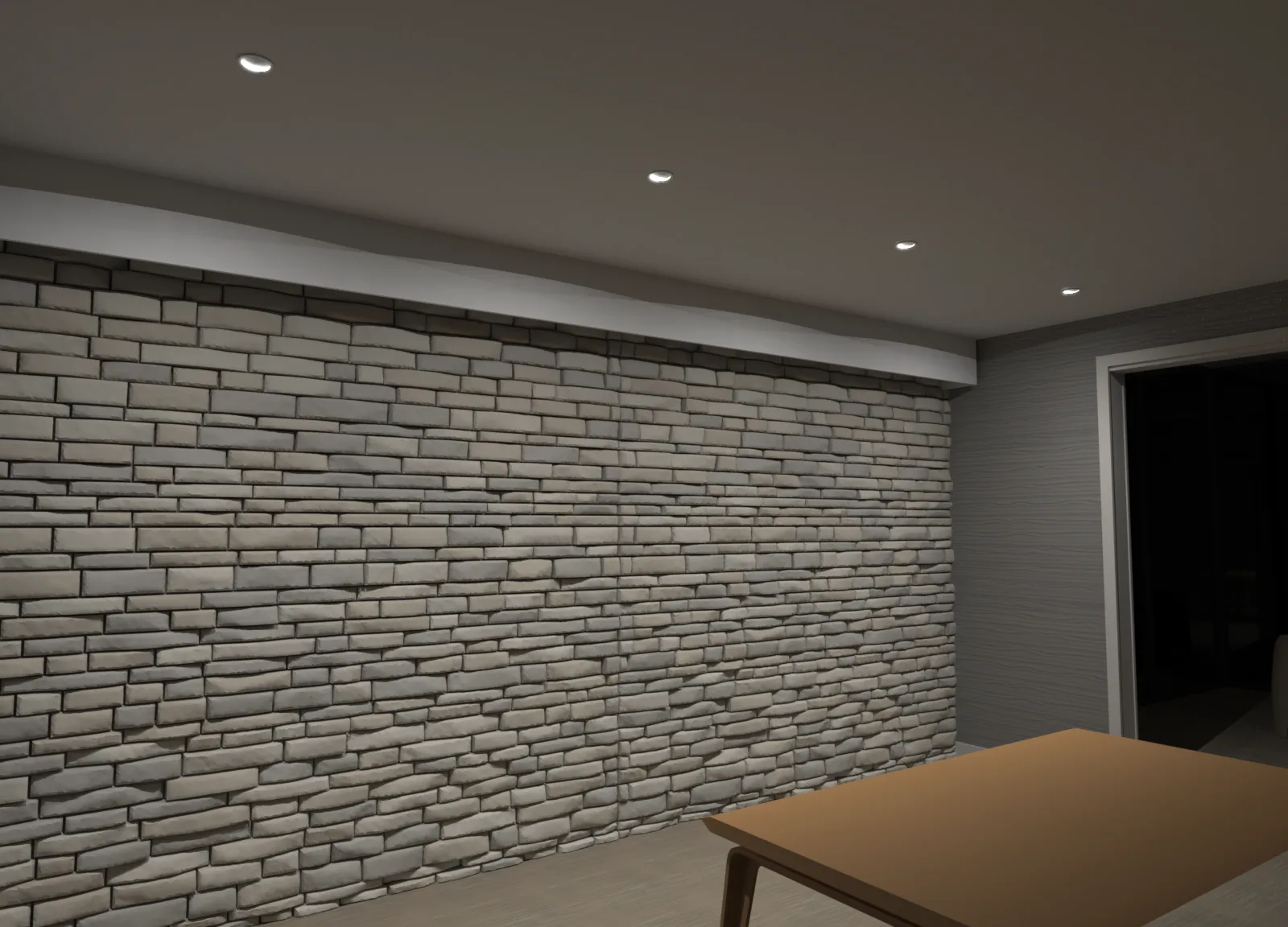
When the light starts close to the wall, it grazes the wall. Each stone casts a shadow and the texture shows. When the light starts further from the wall, it washes the wall. The wall is lit more evenly and the texture is flatter.
Graze a textured wall such as stone, brick or board. Wash a smooth wall or a wall with art. Grazing a smooth plaster wall shows every flaw in the finish.
One pocket for the shade and the light
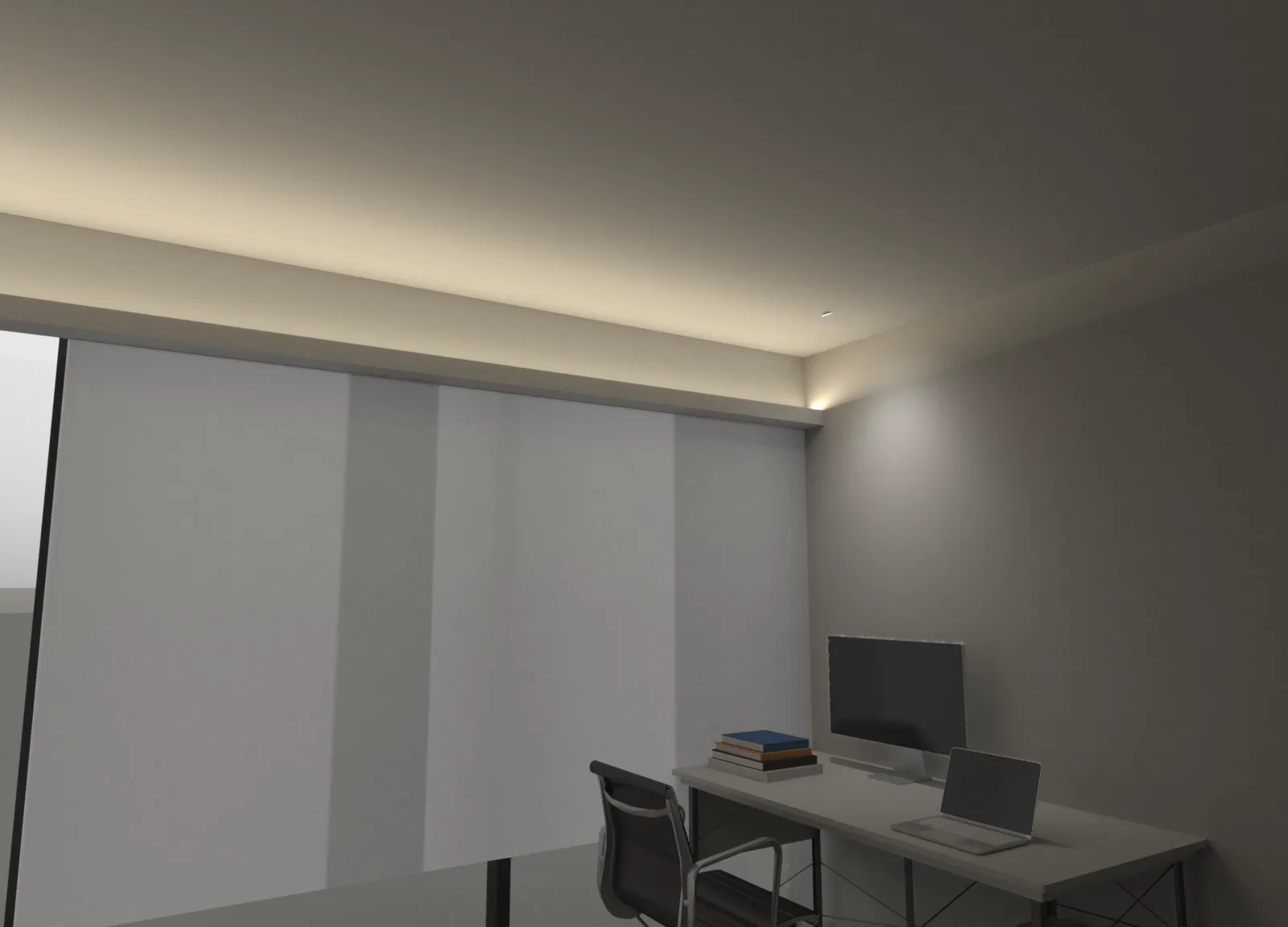
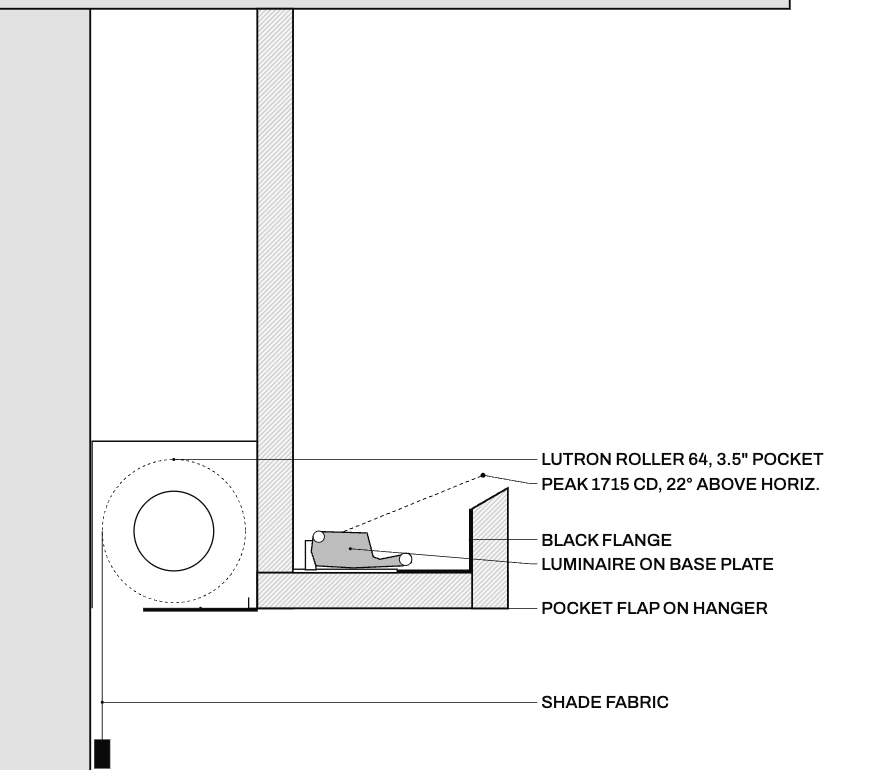
In this office, one pocket above the window has the roller shade and the cove light. The shade comes down from the pocket in the day. The light from the same pocket lights the ceiling.
The section shows a Lutron Roller 64 in a 3.5 inch pocket. The luminaire is on a base plate behind a black flange, which keeps it out of view from the room. Its brightest light is aimed 22 degrees above horizontal, across the ceiling. A flap on a hanger closes the bottom of the pocket.
One detail covers the shade, the luminaire, its aiming and the flap. The architect, the shade supplier and the electrician work from the same drawing.
What to settle with the architect
- How far the cove is below the ceiling, and the fascia or soffit depth required
- The width and depth of the pocket, and where the driver goes
- Whether the cove lights the ceiling or the wall
- The finish of the lit surface. A matte finish shows the light evenly. A gloss finish shows a reflection of the strip.
- Access to the strip and the driver after the ceiling is closed
- How the cove turns corners and where it ends to run the full length cleanly
Our lighting plans include a section for each cove, with the pocket, the luminaire and its aiming. Learn more about how we work with architects.
Common questions
- How far below the ceiling should a lighting cove be placed?
- A cove placed 2 inches below the ceiling keeps light in a tight bright band along the edge. Dropping the cove floor to 8 inches below the ceiling lets the light spread evenly across the ceiling and fade out gradually.
- When should you graze a wall versus wash a wall?
- Graze a textured material such as stone, brick or wood boards by placing the light close to the wall so each surface casts a shadow. Wash a smooth painted or plaster wall from further away, because grazing a smooth wall reveals every finish flaw.
- Can a motorized roller shade and a cove light share one ceiling pocket?
- Yes. A Lutron Roller 64 fits in a 3.5 inch pocket with the cove luminaire mounted on a base plate behind a black flange (aimed roughly 22 degrees above horizontal) and a closure flap below. Use our shade pocket sizer to check pocket dimensions early.
- What color temperature (Kelvin) is best for residential cove lighting?
- Use 2700K for living rooms, dining rooms and bedrooms, or specify warm-dim or tunable white tape that shifts down to 2200K or 1800K in evening scenes. Match the cove color temperature to the other ambient fixtures in the room.
- Where should the LED driver go for cove lighting?
- Place the remote LED driver in an accessible, ventilated location such as a closet, utility room or equipment cabinet. Never bury a driver behind sealed drywall where it cannot be serviced.
- How bright should cove lighting be (lumens per foot)?
- For soft ambient fill on a dimmer, 200 to 400 lumens per foot is typical. Higher output (450 lumens per foot or more) is useful only when the cove is acting as a primary light source in a room with high ceilings.