
Lighting for changing vision
How eyes change with age, why ceiling grids create glare for older vision, and what to build into a home clients plan to stay in.
More light, less glare
By age 70, the eye lets in far less light than it did at 25, and takes longer to adjust when moving between bright and dark rooms. Turning up a single grid of bright overhead downlights makes the room harder to see, rather than easier, because the bare ceiling sources scatter light across the eye.
Good residential lighting for older eyes raises overall brightness through lit walls, indirect coves, and shaded task lamps. Surfaces stay bright and readable while the light sources remain out of the direct line of sight.
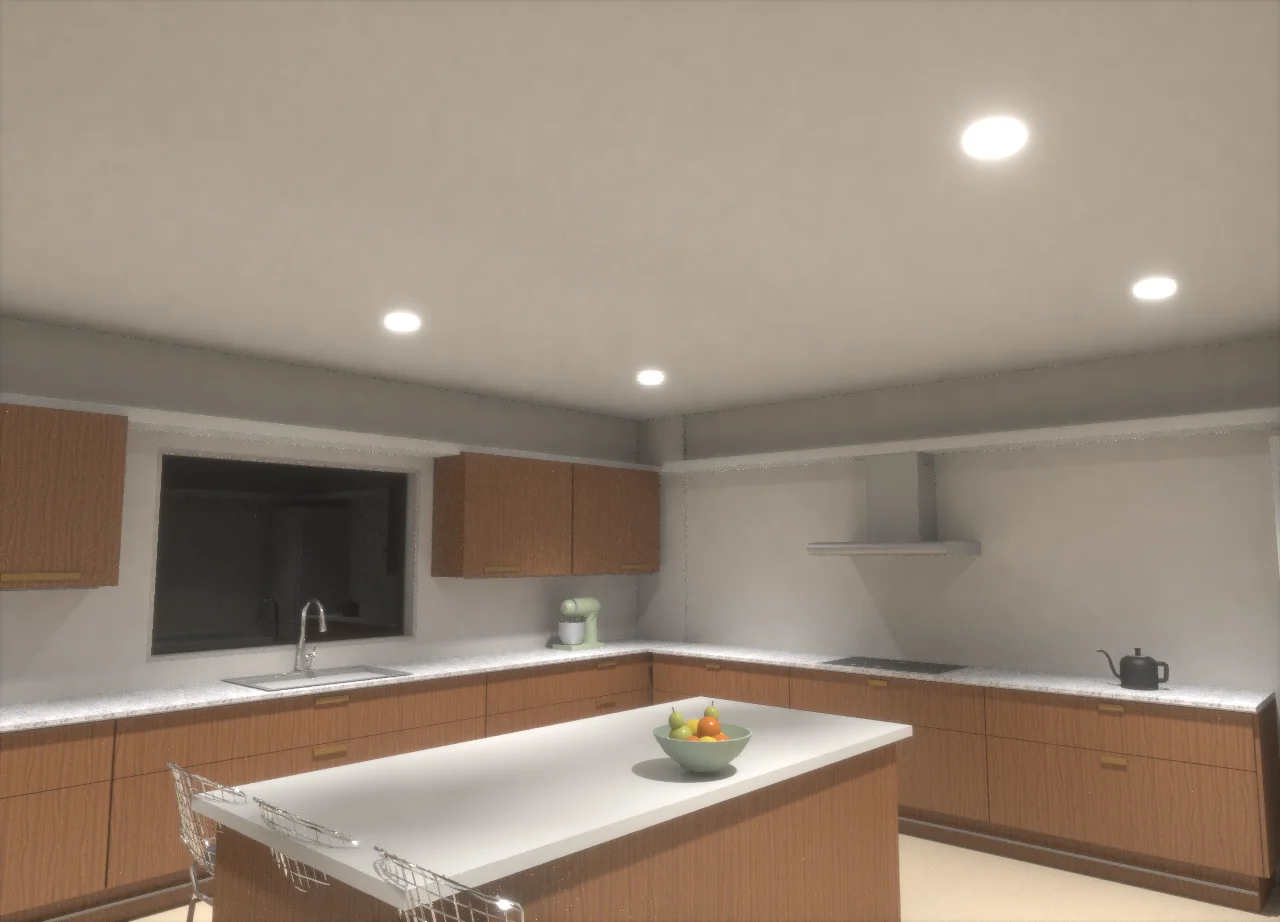
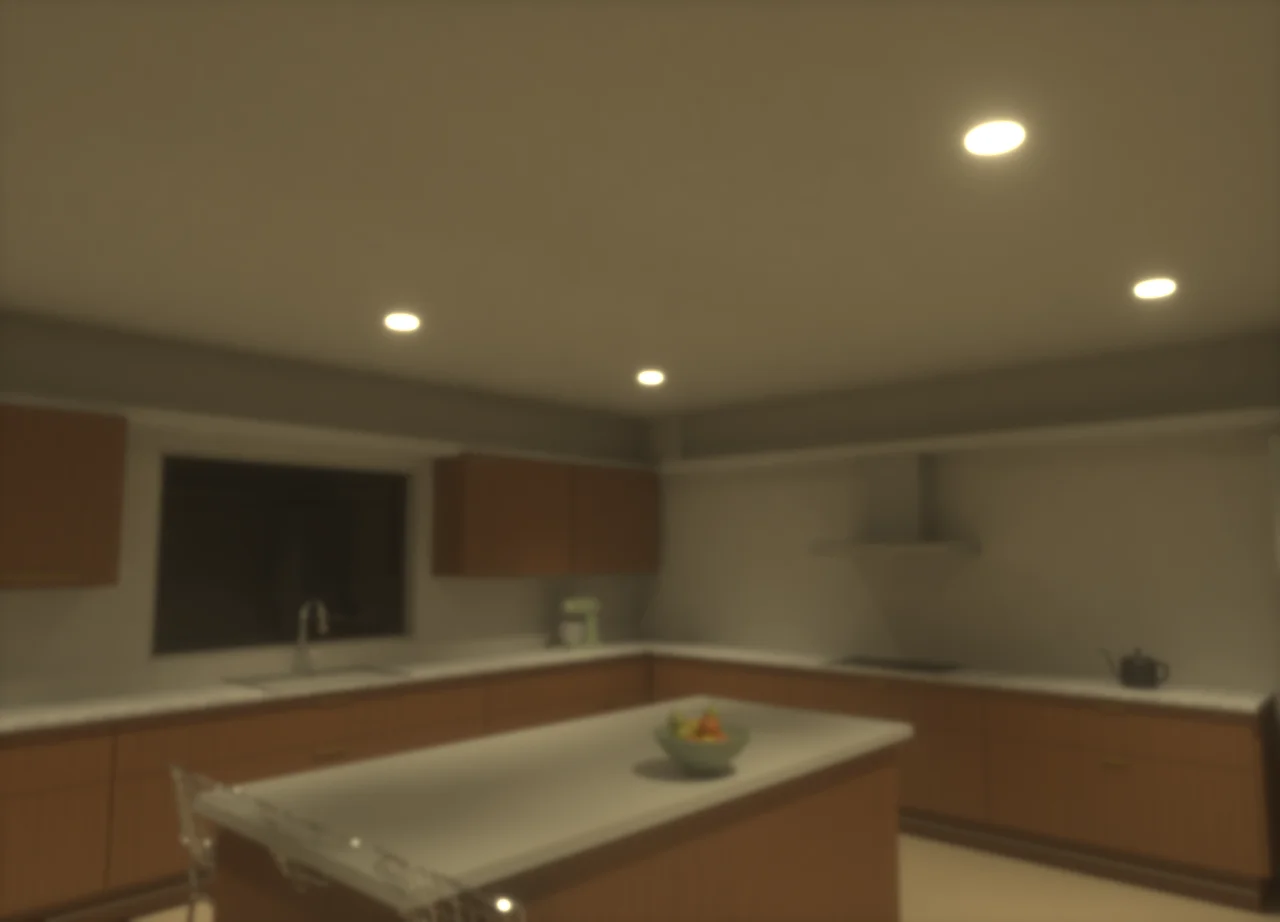
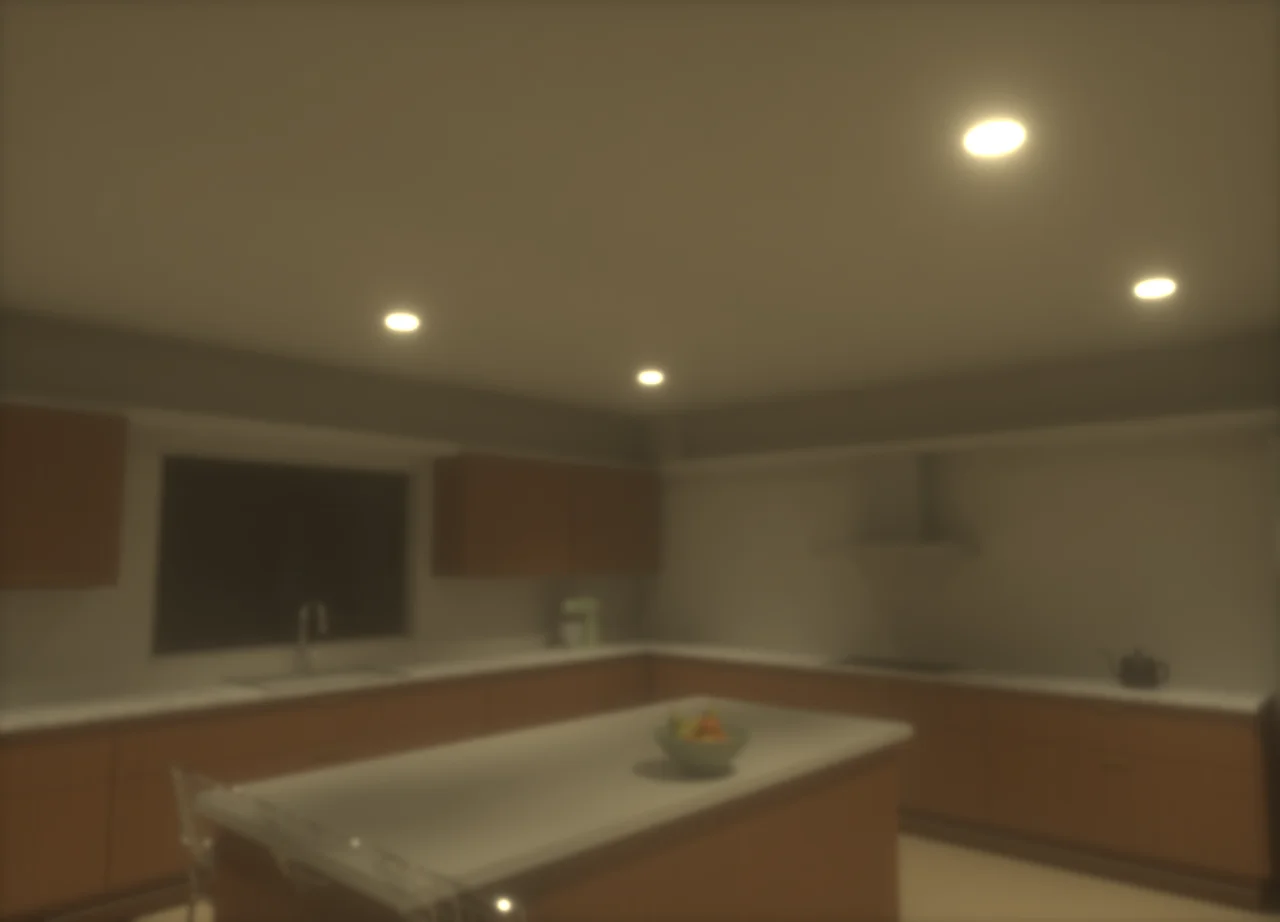
Cataracts and overhead downlights
When a cataract clouds the lens, every bright point source blooms into a haze that washes out the room behind it. Downlights aimed straight down from the ceiling become the brightest objects in the field of view.
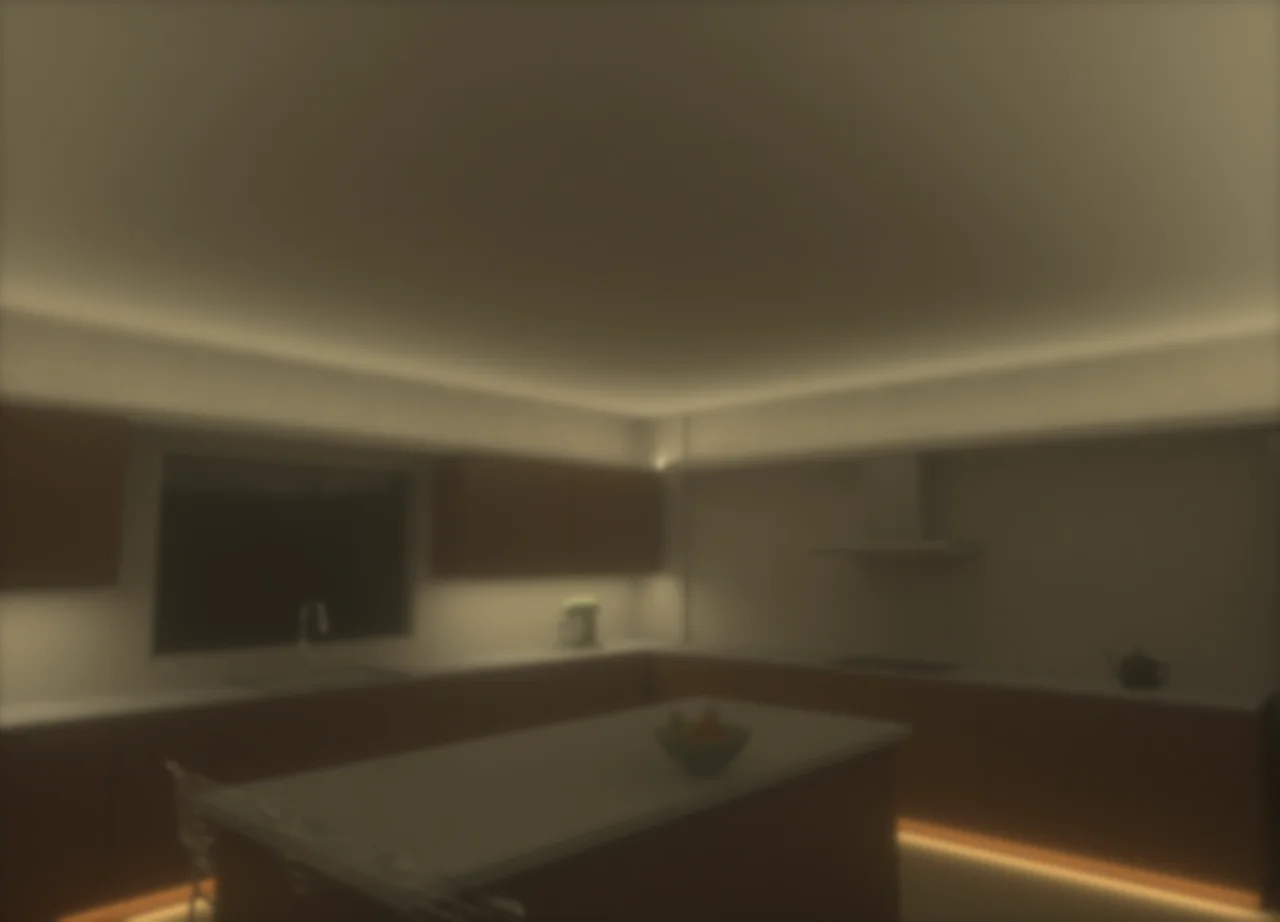
Replacing bright point sources with indirect wall washes, deep-baffle optics, and local reading light removes the haze. The room feels calmer for younger residents as well, and never looks institutional.
The night route from bed to bathroom
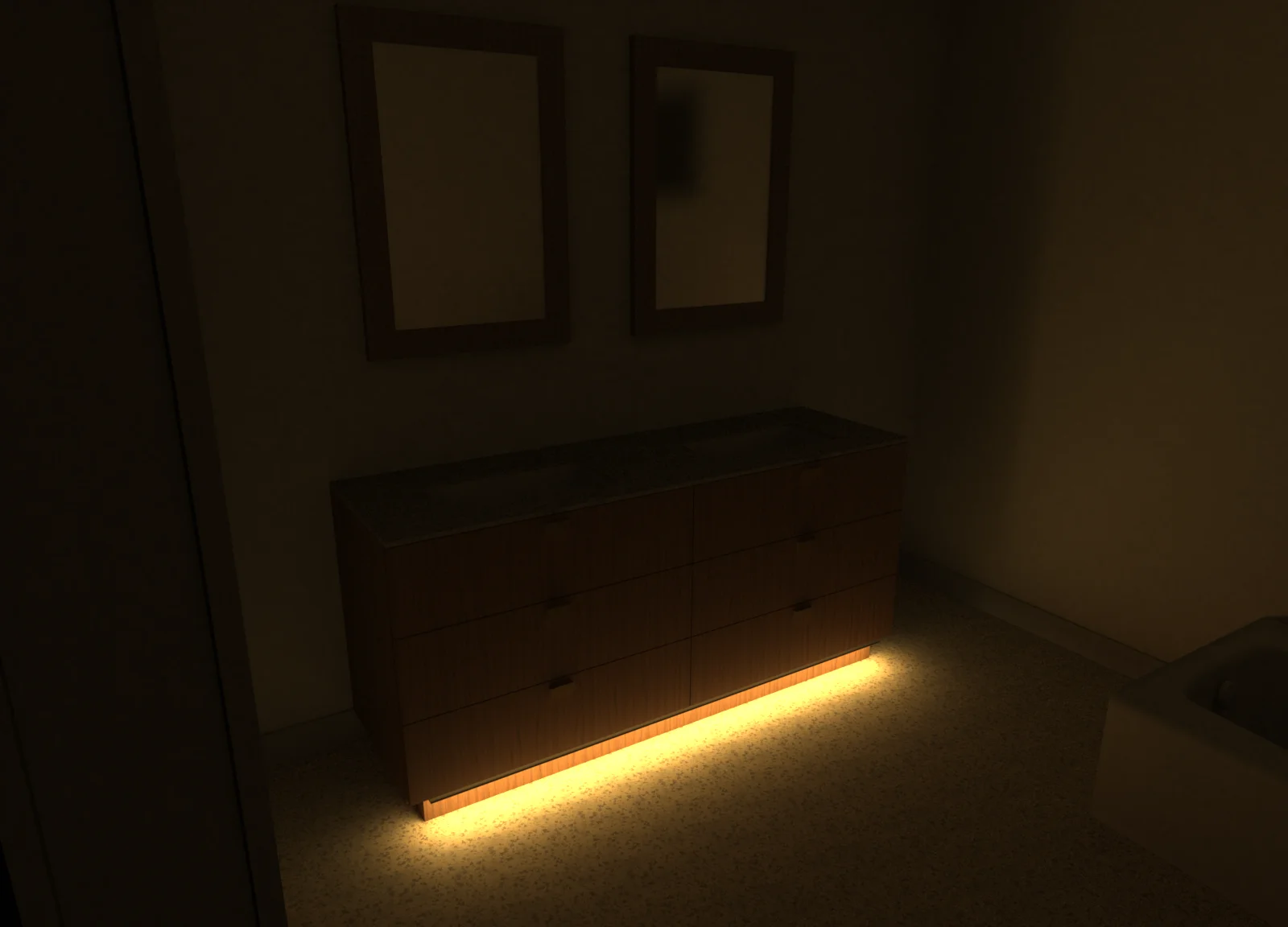
Walking into a bright bathroom at 2 a.m. blinds dark-adapted eyes and makes returning to sleep harder. An older eye recovers from that flash much more slowly.
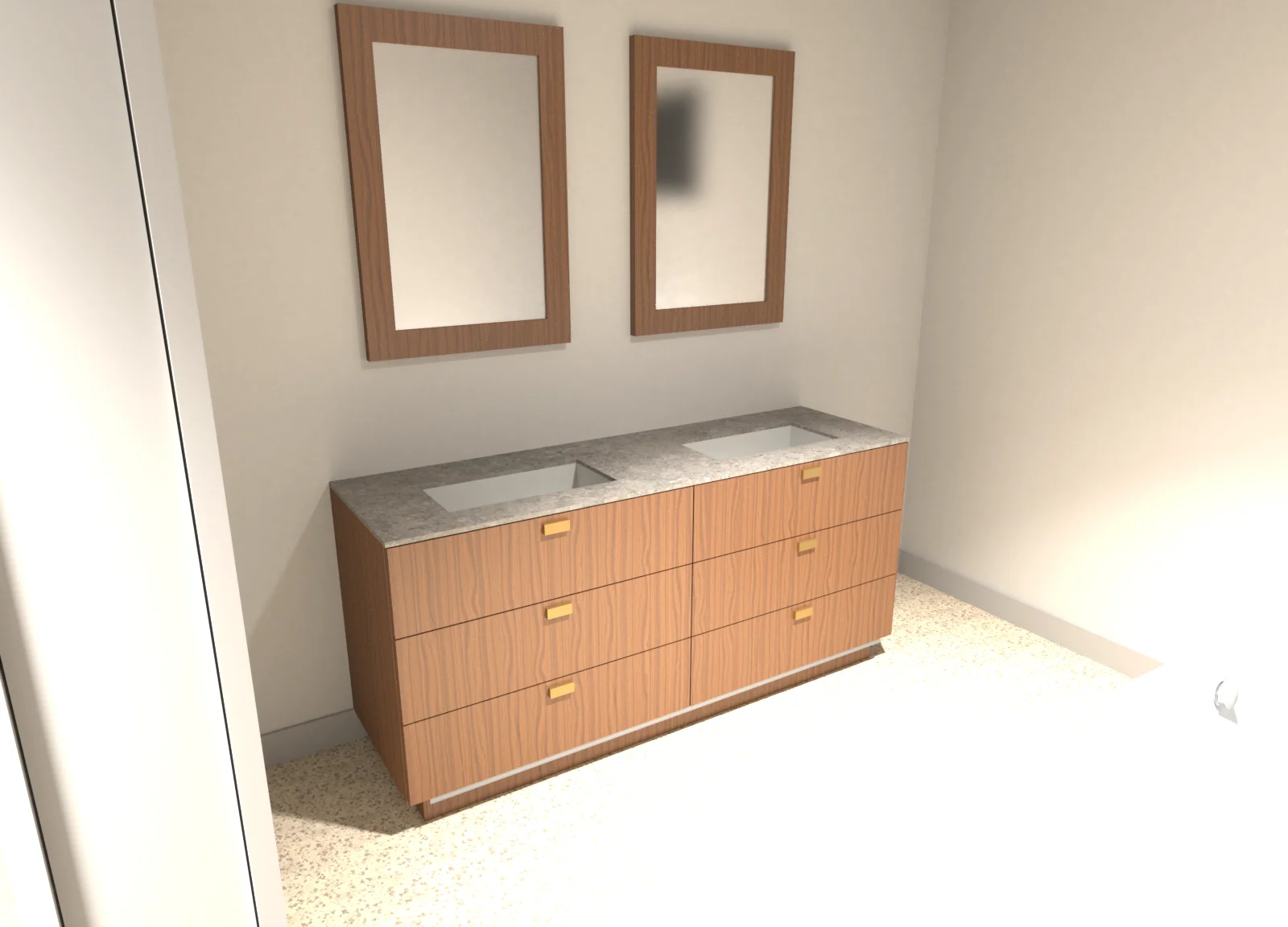
Motion-triggered low amber step lights and under-vanity strips light the floor, door threshold, and toilet without shining into the eyes. The overhead vanity and shower lights stay off until someone presses a scene button.
What to build into the house early
Fixtures and control platforms change every 10 to 20 years, while framing, boxes, and conduit last 40 years or more. Plan the infrastructure during construction, even when the clients are in their 40s.
- Low boxes along the bed-to-bathroom route and stairs for step lights
- Sconce boxes on both sides of bathroom mirrors for even face light
- Switched bedside control and dedicated reading outlets at the bed head
- Power at window heads for motorized shades to manage daytime glare
- A neutral wire in every switch box and accessible locations for drivers
- Simple, clearly engraved scene keypads that guests and caregivers can use immediately
We design homes with headroom built into the lighting and controls, ready to be re-tuned as needs change. Learn how we work with architects.
Common questions
- Why do bright ceiling downlights make rooms harder to see for older eyes?
- By age 70, the eye admits much less light and scatters bare point sources across the lens, especially with cataracts. Indirect coves, lit walls, deep-baffle optics and shaded task lamps raise surface brightness without putting bright glare sources in the line of sight.
- How should the night route from bed to bathroom be lit?
- Use motion-triggered low amber step lights and under-vanity strips to light the floor, door threshold and toilet without turning on bright overhead vanity lights that disrupt dark adaptation and sleep.
- What aging-in-place lighting infrastructure should be roughed in during construction?
- Rough in low step-light boxes along the bed-to-bathroom path and stairs, sconce boxes on both sides of bathroom mirrors, bedside control and reading outlets, window-head power for motorized shades, neutral wires in every switch box, and accessible driver locations.
- How much more light do older eyes need for reading and cooking?
- A 60- to 70-year-old eye typically needs two to three times the light on reading and prep surfaces compared to a 25-year-old eye. Deliver that extra light through shielded task lamps, under-cabinet strips and indirect wall light rather than turning up bare ceiling downlights.
- What is the best lighting around a bathroom mirror for older eyes?
- Mount vertical sconces at eye height on both sides of the mirror so light fills both sides of the face evenly. A single downlight overhead casts deep shadows under the eyes, nose and chin.